Most underperforming cannabis dispensaries point to a single issue when results start to slide: pricing pressure, taxes, competition, regulation, or capital constraints.
In practice, those factors are rarely the root cause. When the real issue isn’t obvious, the risk is structural. If these patterns sound familiar, it may be time to take a closer look at how your store is operating.
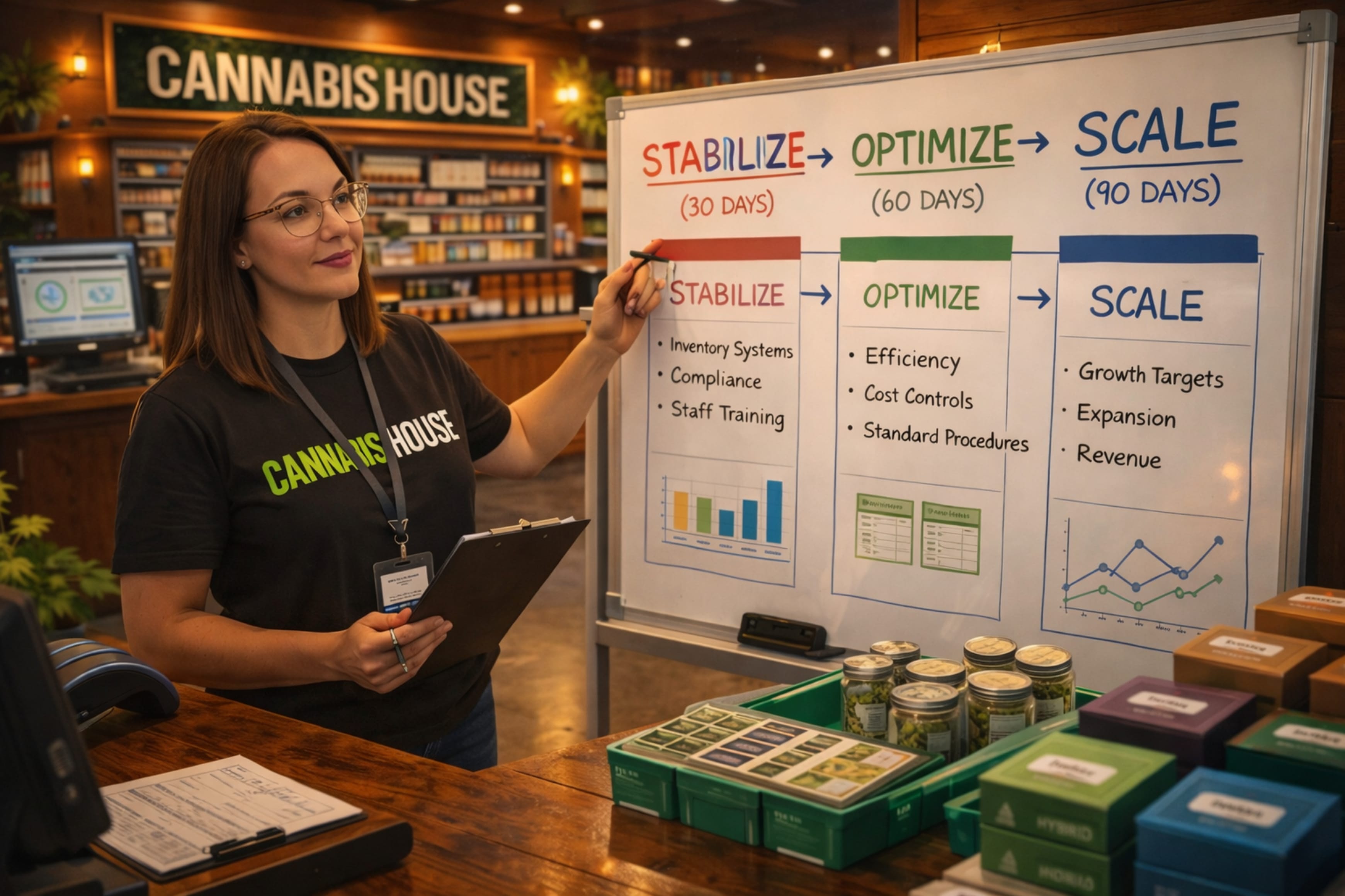
What we see most often is not a broken business — but the absence of an operating system.

Dispensaries tend to fail slowly, through a series of small breakdowns that compound over time: inconsistent inventory discipline, reactive compliance practices, unclear accountability, and decision-making driven by urgency rather than structure. None of these issues alone are fatal. Together, they create chaos that erodes margins, staff confidence, and external trust.
The most reliable indicator of long-term success in regulated cannabis retail is not location, branding, or short-term promotions. It is the presence of repeatable systems: how inventory is purchased and tracked, how compliance is operationalized, how staffing scales, and how performance is reviewed consistently.
When those systems are installed correctly, multiple problems resolve at once. Operations stabilize. Compliance pressure decreases. Teams regain clarity. External stakeholders regain confidence.


This is why turnaround outcomes often feel sudden from the outside. The change is not sudden — it is structural.
In regulated markets, cannabis retail does not reward improvisation. It rewards discipline.