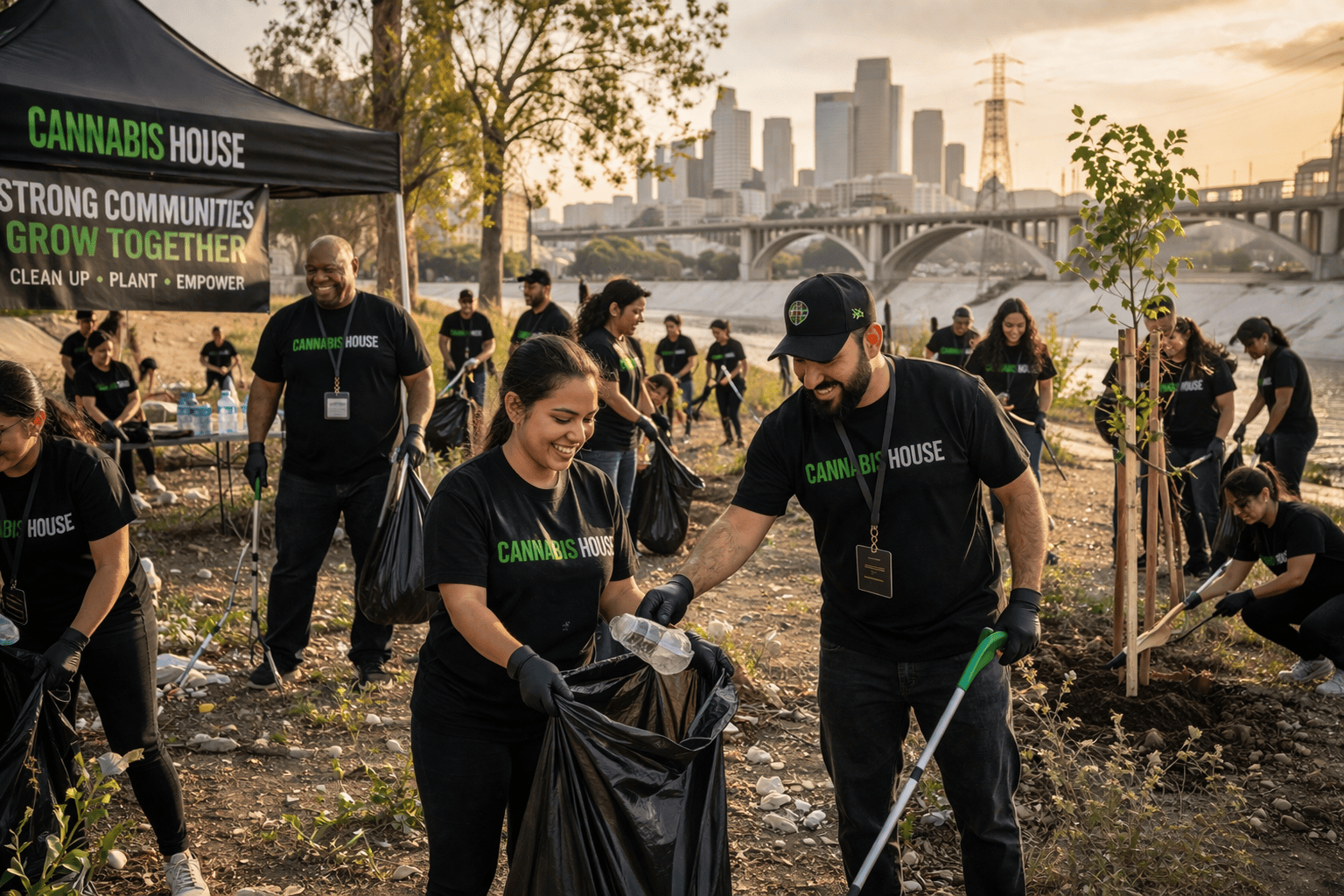
For Rabin Woods, building a successful business and building a stronger community are not separate ideas.
As a partner at Cannabis House and the driving force behind Jus Tus, Woods operates at the intersection of entrepreneurship, social equity, reentry, and community development in Los Angeles. His work reflects a larger idea about what opportunity can mean: creating pathways for people to move forward, build stability, and eventually create opportunities for others.
That philosophy is especially important in communities where incarceration, economic instability, housing challenges, and limited access to employment can make starting over extraordinarily difficult.
For Woods, reentry is not simply about returning home.
It is about what happens next.
Jus Tus approaches reentry from a whole-person perspective.
People returning from incarceration may need employment, but a job alone does not address every obstacle standing between someone and long-term stability. Housing, transportation, education, family relationships, legal obligations, recovery, mentorship, financial literacy, and access to supportive networks can all become part of rebuilding a life.
That is why Jus Tus focuses on the person rather than a single problem.
Its work supports justice- and system-impacted adults and transitional-age youth through services designed to help people establish stability, develop practical skills, strengthen relationships, and create sustainable paths forward.
The underlying principle is straightforward: successful reentry requires opportunity, but it also requires support.
And when both are present, the impact can extend far beyond one individual.

Employment and economic mobility are particularly important pieces of that equation.
A person can complete a sentence and return to the community, yet still encounter barriers to employment, housing, professional development, and financial independence. Without meaningful pathways into the economy, the promise of a second chance can remain largely theoretical.
Jus Tus works to help close that gap.
Through workforce development, education, life-skills support, mentorship, and connections to resources, the organization helps people prepare not simply to find work, but to build greater independence over time.
That mission also creates a natural connection to the broader conversation surrounding cannabis social equity in Los Angeles.
Social equity in cannabis is often discussed in terms of licenses and business ownership. Those issues matter, particularly in communities disproportionately affected by cannabis prohibition.
But the impact of social equity can extend beyond who owns a cannabis license.
It can also involve who receives an opportunity, who gets hired, who develops new skills, who advances into leadership, where businesses invest, and whether economic activity creates meaningful benefits within the communities those businesses serve.
That broader understanding of opportunity is part of what connects the work surrounding Jus Tus with Woods' role at Cannabis House.
Cannabis House describes its business around more than retail alone. Its broader platform includes partnerships with entrepreneurs, license holders and investors, while its community work focuses on social equity, local initiatives and the people shaping Los Angeles. Cannabis House
For Woods, those worlds do not have to exist independently.
Business can create jobs. Jobs can create stability. Mentorship can create confidence. Experience can create leadership. And people who once needed an opportunity can eventually become the people creating opportunities for someone else.
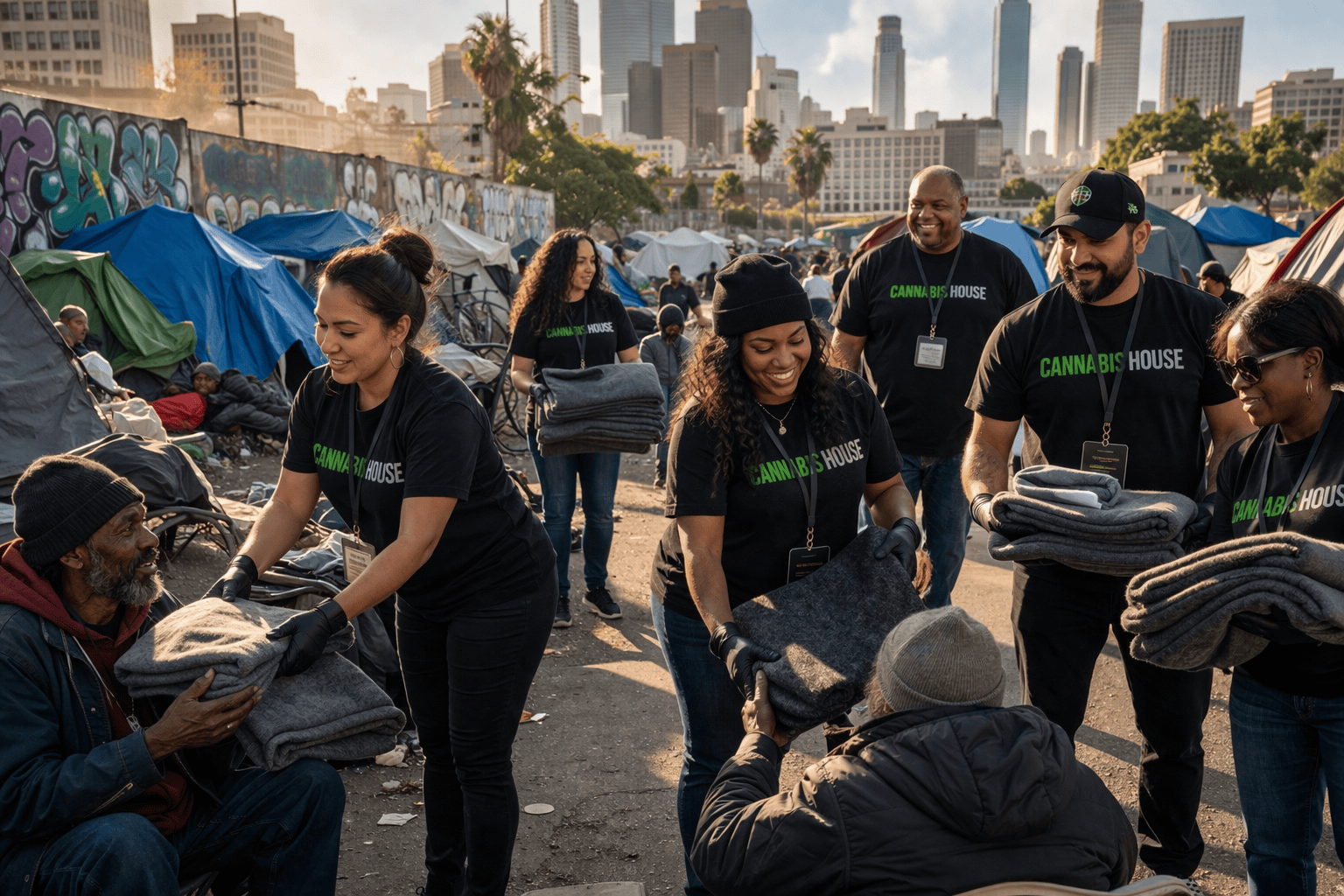
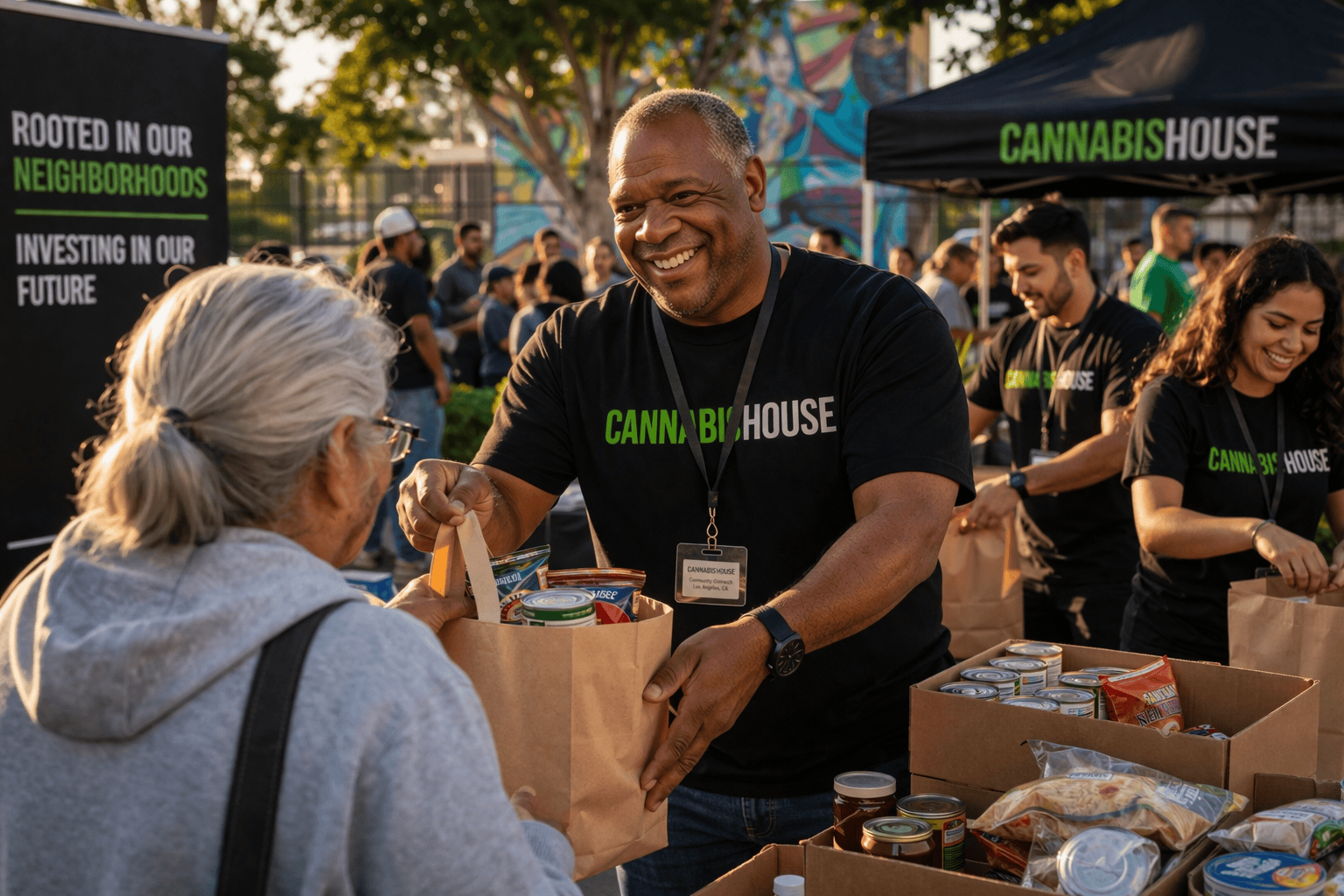
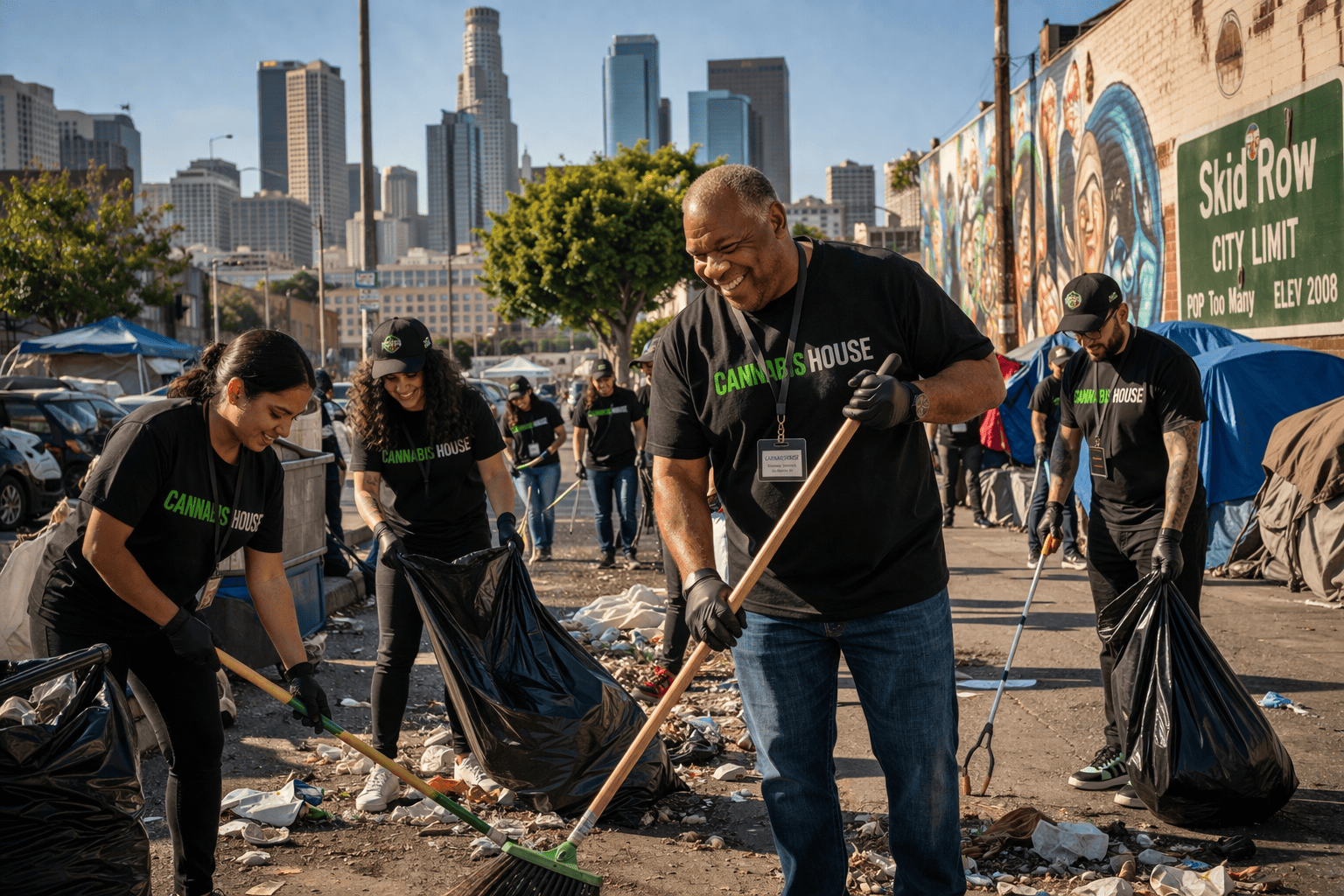
That work carries particular significance in South Los Angeles, where questions surrounding reentry, economic mobility, social equity, and community investment often intersect.
Jus Tus focuses its work on individuals and communities that can face significant barriers during the transition toward stability. Rather than treating those challenges in isolation, its model recognizes how closely connected they can be.
Someone struggling to secure housing may have difficulty maintaining employment. Someone without transportation may struggle to reach a job consistently. A young adult without mentorship may have few people available to help navigate education or career decisions.
Addressing only one piece can leave the larger problem intact.
The goal is therefore bigger than providing a service.
It is helping build the conditions in which someone can succeed.
That philosophy can be reduced to an idea that sits at the center of Jus Tus:
Help the person. Not just the problem.
It changes the way reentry is viewed.
Instead of defining someone by incarceration, unemployment, housing insecurity, or another immediate challenge, the focus moves toward the person—their abilities, responsibilities, relationships, ambitions, and potential.
It is an approach built around dignity and accountability at the same time.
Support matters. So does personal development.
Opportunity matters. So does preparation for that opportunity.
And ultimately, success is not measured only by whether someone receives help today, but by whether that person develops the stability and capacity to move forward tomorrow.
Woods' work with Jus Tus and Cannabis House offers a broader way of thinking about community impact.
A successful cannabis business can be measured by customers, revenue, operations, and growth. Those fundamentals remain essential. Cannabis House itself emphasizes disciplined retail operations, partnerships, team development, and sustainable store performance across its broader business platform. Cannabis House
But businesses also exist within communities.
They employ people. They create relationships. They develop leaders. They control resources. And they make choices about how their success connects—or does not connect—to the neighborhoods around them.
For Rabin Woods, the opportunity is to build both.
Through Jus Tus, that means helping justice- and system-impacted individuals build stronger foundations for life after incarceration and other difficult transitions.
Through Cannabis House, it means participating in an industry where entrepreneurship, social equity, employment, ownership, and community investment continue to evolve together.
The common thread is opportunity.
Not opportunity as a slogan.
Opportunity that gives people something real to build from.
Because the strongest second chance is not simply being allowed to start again.
It is having the tools, support, relationships, and opportunity to build something that lasts. Visit HouseJusTus.org